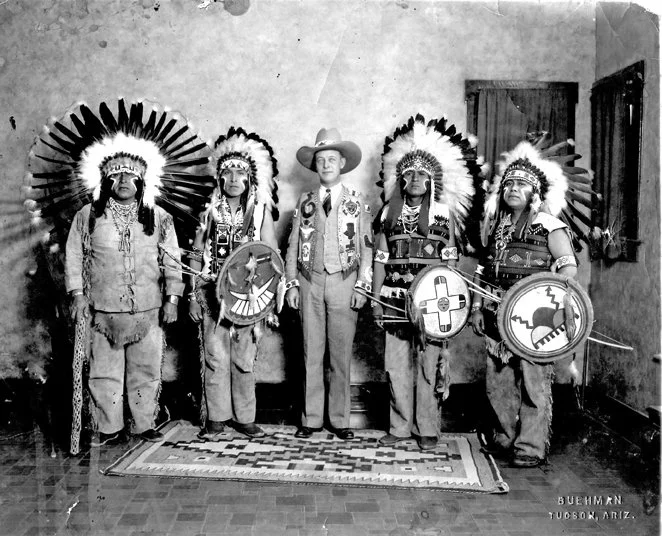
The Billingsley Hopi Dancers
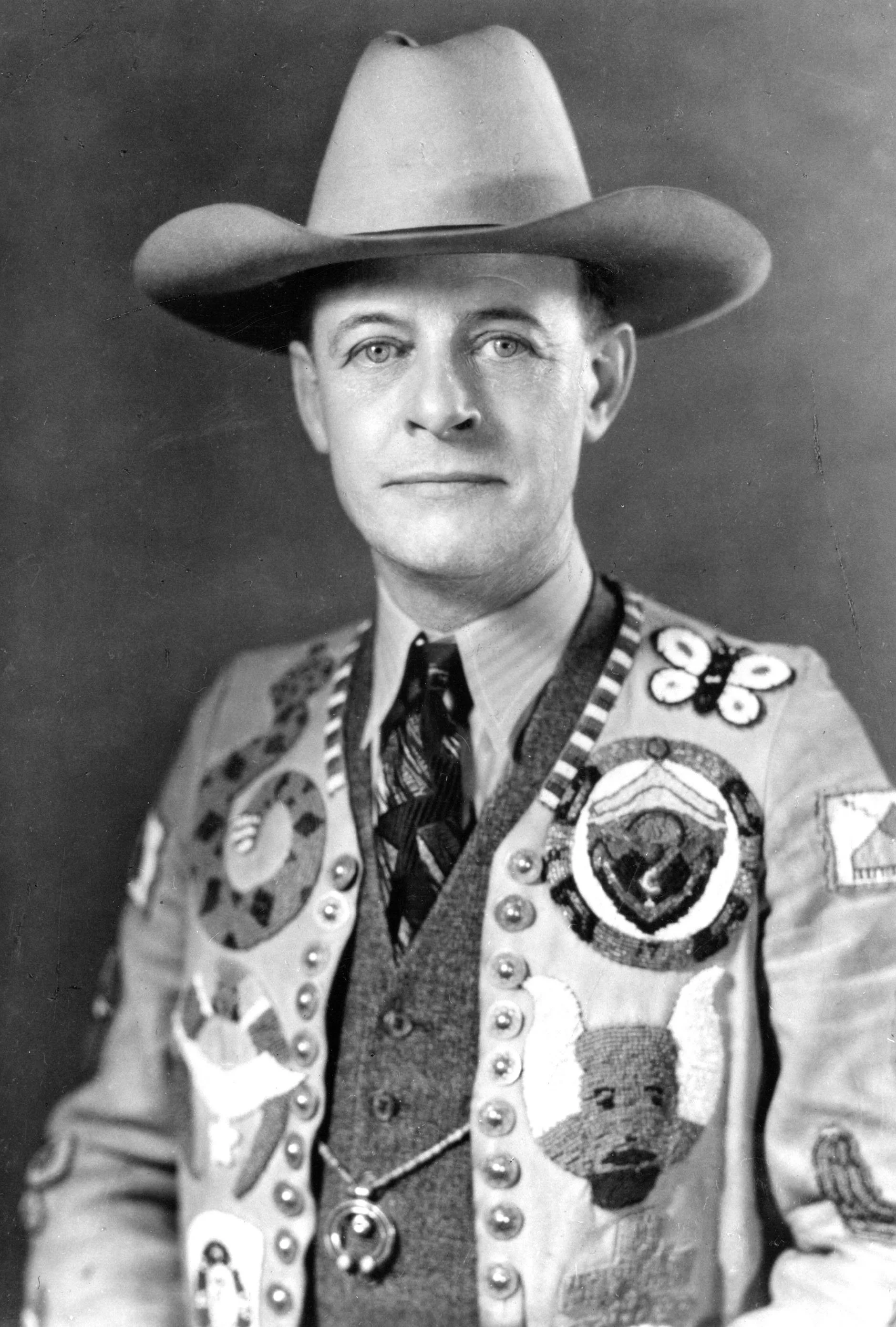
M.W. Billingsley was born in 1890 in Iowa. He became fascinated with the Hopi Tribe. Without his parents’ knowledge he bought a ticket to Winslow, Arizona in 1904 (at age 14) where he met Lorenzo Hubbell. He made his way to Hopi with the help of a Hopi who worked at the Trading Post. He visited with the Hopi of Second Mesa. He stayed about six weeks until his father figured out where he went and came to get him.
He returned to Hopi when he turned 18. Billingsley is reported to have started the first school in the village of Mishongnovi on Second Mesa. In 1921 Billingsley was approached by the Bureau of Indian Affairs Superintendent and told that “some church people” had petitioned Congress to make the Hopi stop their “pagan” dancing. Billingsley was a member of the El Zaribah Shriners in Phoenix. The Shriners suggested that Billingsley bring the Hopi to Phoenix to perform dances to show that they should not be prohibited. Billingsley formed the dance group and a group of chanters. Their performance was well received and they “toured” Shriner Temples across the country.
In 1926 they received an invitation to appear in Washington, D.C. A special platform was erected on the Capital steps. Both Houses of Congress had assembled with their families and with foreign emissaries. Billingsley opened with a plea to retain their religious ceremonials and described each of the dances. Following the performance, the 69th Congress passed a resolution giving Native Americans permission to carry on their dancing “for all time.”
The group of Billingsley dancers and chanters continued to tour across the country.
Ken’s talk will provide background on this episode in American history and show a clip from a film of the dancers that was discovered and preserved by the Verde Valley Archaeology Center and the Hopi Tribe. Ken was a consultant on a BBC public television series on the history of American music, and provided a film clip for the series of the Hopi dancers.