Meteorite Museums from Route 66 to Sedona
“Route 66 has become a symbol of the heritage of travel and the legacy of seeking a better life shared by the people of the United States, and because Route 66 has been enshrined in the popular culture of the United States” -- Public Law No: 116-256
As part of Arizona’s year-long celebration of the Centennial of Route 66, Ken Zoll, author of H.H. Nininger: Master of Meteorites, presents the story of “The Rise and Fall of the Route 66 Meteorite Museums.”
In 1857, U.S. Army Lt. Edward Beale, with 25 camels hauling supplies, surveyed a 1,000-mile trail across New Mexico and Arizona to the Colorado River. Beale’s trail became a well-worn path for westward migration and later became part of the creation of U.S. Route 66 in 1926.
Route 66 created great interest in the West and the American Indian. It spurred the development of quirky, entrepreneurial roadside attractions, including snake pits, show caves, trading posts, and carnival-style amusements. One of those attractions was a meteorite museum near the famous Meteor Crater west of Winslow.
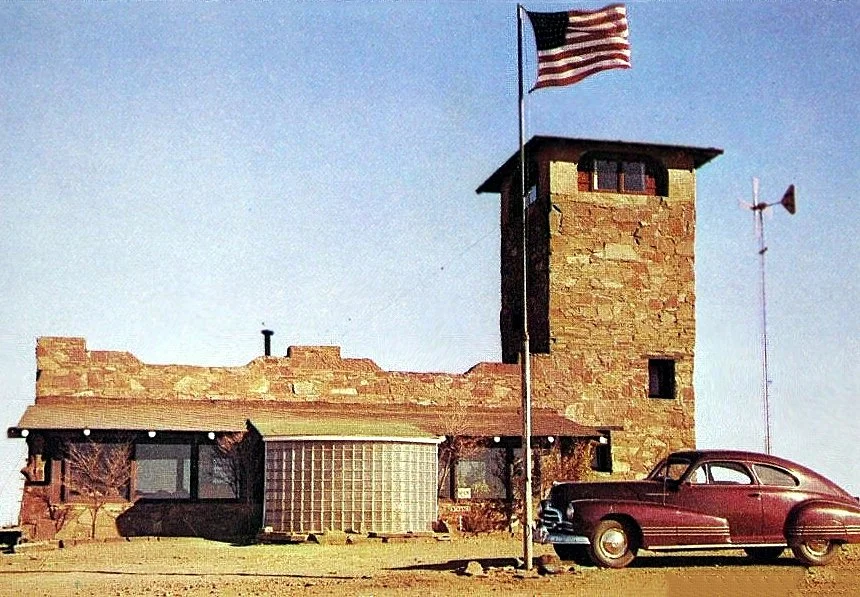
Harry Locke was fascinated by Meteor Crater and built his “dream museum” on Route 66. It opened in July 1936 as a museum and rock shop with a tower where visitors could use a telescope to view Meteor Crater. Unfortunately, this was still during the Great Depression, so paying visitors were too few to support the Observatory. It closed in 1938 and the building became one of the many Indian curio shops.
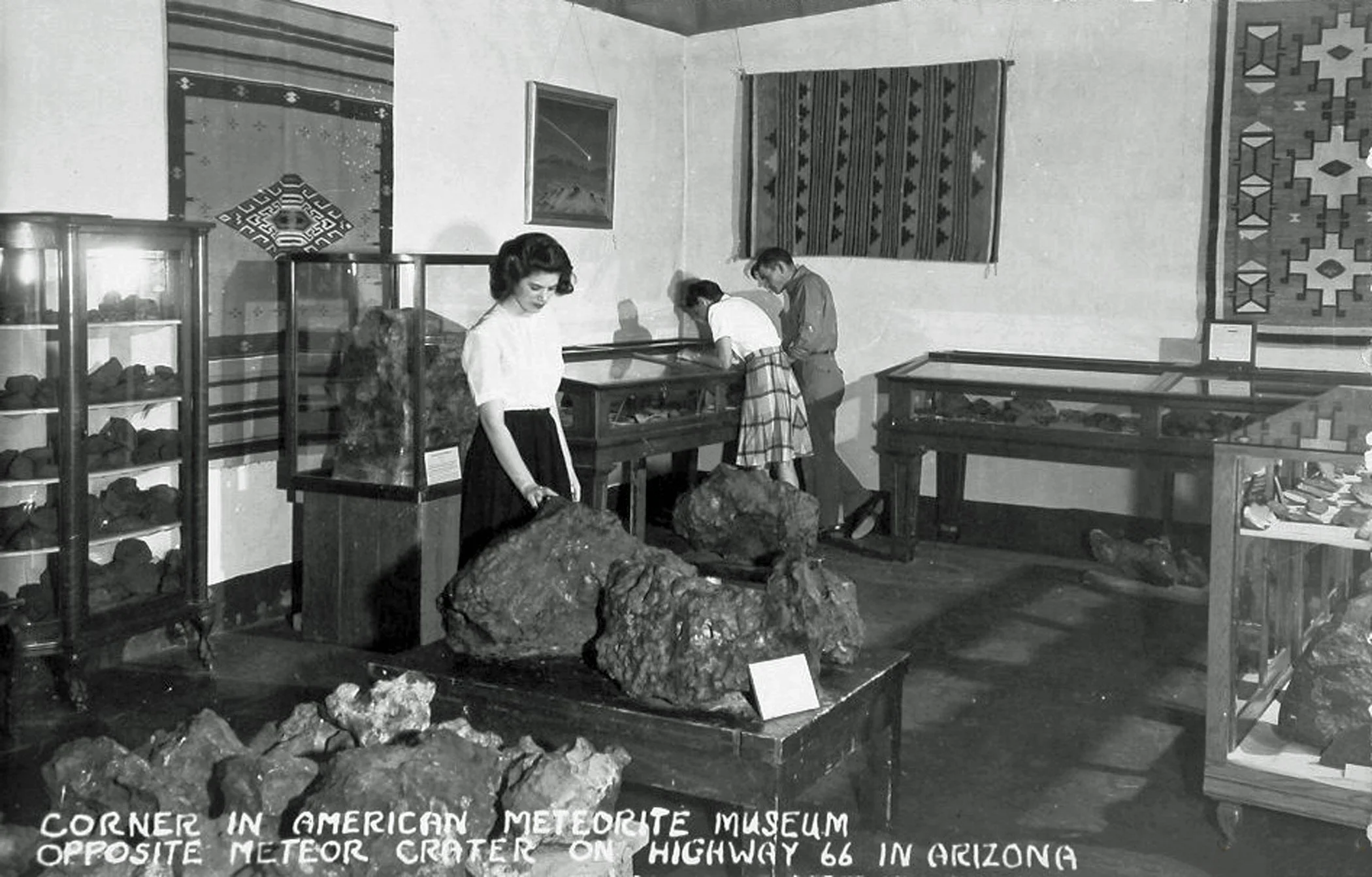
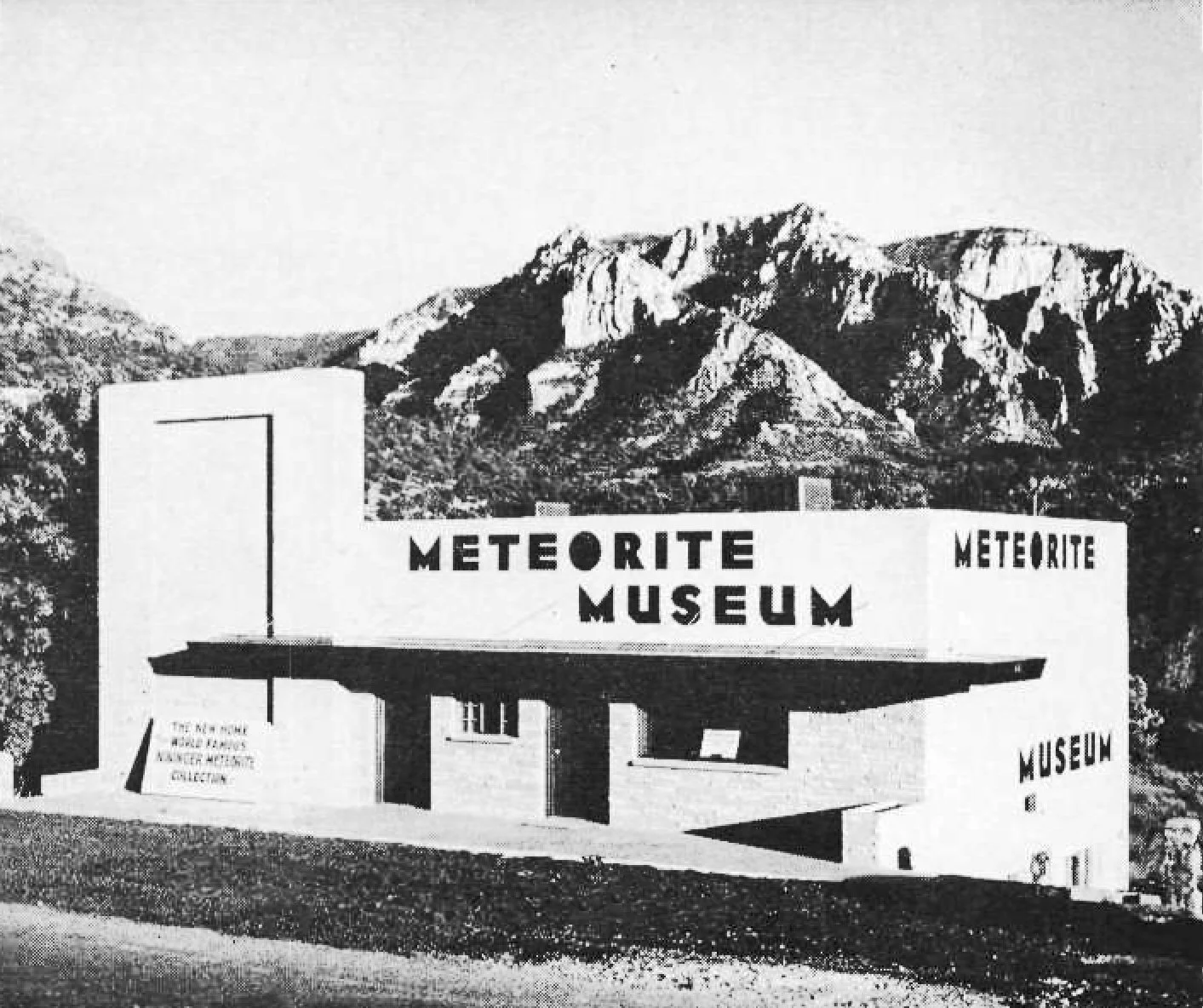
In 1946, Harvey H. Nininger, regarded as the “Father of American Meteoritics” moved near Meteor Crater from Denver to create a meteorite museum to house his meteorite collection, the world’s largest at the time. He leased the former Observatory to establish the American Meteorite Museum. However, his timing was also unfortunate. Route 66 was rerouted in June 1949 for the planned Interstate 40. This resulted in a drop in visitors and income. Unable to sustain the museum, he closed the museum on Route 66 and moved the museum to Sedona in 1953.