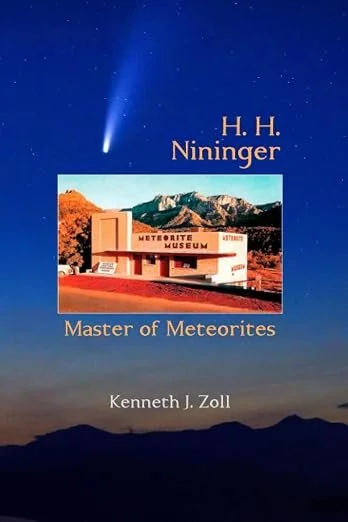
H.H. Nininger: Master of Meteorites
Ken Zoll, author of H.H. Nininger: Master of Meteorites, provides an overview of the career and discoveries of H.H. Nininger, considered by many to be the “Father of American Meteoritics,” the study of meteorites.
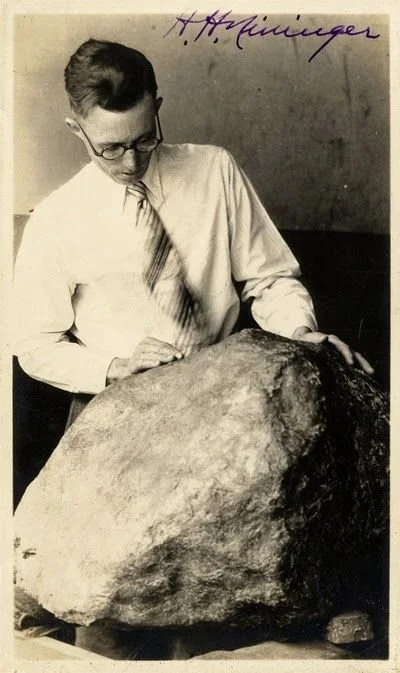
Harvey Harlow Nininger was born in 1887 and attended McPherson College in Kansas, where he later taught biology. In November 1923, he saw both a photograph of Meteor Crater and a meteor in the sky. Nininger subsequently dedicated his life to finding meteorites. When he began to search for them as a young man, he was told by the Smithsonian Institution’s head curator of geology, “if you live to be 100 and find one meteorite, you will have done well.” Despite this, by 1941 his personal collection represented one-half of all the known meteorites in the world.
During his long career as a pioneer and innovator in the field, Nininger wrote ten books and 162 articles on meteoritics. He also served as the Curator of Meteorites at the Denver Museum of Natural History from 1930 to 1943.
After deciding to create his own museum to showcase his collection, Nininger and his wife scouted locations in Flagstaff in 1946 before relocating the collection from Denver to a building on Route 66 near Meteor Crater that they called the American Meteorite Museum. Nininger moved the museum to Sedona in September 1953 after Route 66 was rerouted in preparation for the construction of Interstate 40 which resulted in a decrease in visitors. Sedona was not yet a tourist town and Nininger was forced to close the museum in 1957. He sold part of his collection to the British Museum of Natural History, but most of the collection to Arizona State University’s Center for Meteorite Studies.
This presentation will show how Nininger was the “master of social media of the day “– newspapers and magazines such as Life, Saturday Evening Post, Newsweek, Colliers and many more. Some of his investigative techniques and meteorite discoveries will be shown.